


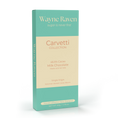



- Carvetti™ 46.5% Cacao Dark Milk Chocolate
- Weight: 50g / 1.76 oz
- Recyclable Packaging
Tasting Notes
Tasting Notes
Bold and rich chocolatey notes with undertone hints of hazelnut, toffee and malt. A satisfying finish.
Sweetness Profile
Sweetness Profile
- Gentle
- Moderate
- Rich
- Sweet
Cacao Intensity
Cacao Intensity
- Subtle
- Mild
- Bold
- Intense
Nutrition Information
Nutrition Information
- Ingredients: Cacao solids 46.5% (Cocoa butter & Cacao beans), Whole milk solids, Cane sugar, Soy lecithin 0.5%.
Allergen Information
Allergen Information
- Allergens: Milk, Soy
- May Contain: Tree Nuts, Hazelnuts, Walnuts, Peanuts, Almonds, Cashews, Egg, Sesame, Lupin, Gluten, Wheat, Oats.
New Zealand Dairy
Full Cream Milk
Chocolate Makers
From Raw Ingredients to Chocolate
Handcrafted in NZ
Every Bar Is Handmade
Solomon Islands Cacao Beans
Ethically Sourced Beans
Cocoa Butter
Pure Cocoa Butter
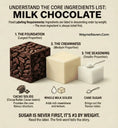
Sugar Is Never First ™
Listed At #3 By Weight
-
RICH CACAO TASTE
-
FULL FLAVOUR FINISH
-
MORE TO SAVOUR
You deserve chocolate worth savoring
- Frustrating chocolate is no fun.
- Don't ignore that feeling.
- You were made for more.


Enjoy dark milk chocolate with deeper flavour, balance, and a smoother finish
-
FEEL A SMOOTH, CLEAN MELT
A cocoa butter-rich structure supports a cleaner melt and a longer finish, helping the chocolate feel more satisfying as it opens up.
-
TASTE MORE IN EVERY BITE
For you who want a dark milk chocolate with a fuller cacao profile, this bar brings more depth, more presence, and a bolder finish.
-
ENJOY BALANCED SWEETNESS
Created so the deeper chocolate notes stay in balance, keeping the bar smooth and approachable while giving it more weight.
Wayne doesn't just care about chocolate.
He cares about you.
🍫 Chocolate Maker Since 2019 - always refining for balanced flavour.
⭐ #1 Customer Choice at our booth - 35% Matcha White Chocolate at Auckland Chocolate & Coffee Festival 2025 - with strong feedback across the range.
⚖️ Sugar Is Never First ™ - it's listed as the third ingredient by weight - it's treated like seasoning.


YOU CAN BE SOMEONE WHO TRULY APPRECIATES CACAO FORWARD CHOCOLATE
Dark milk chocolate built on a foundation of cocoa butter and cacao beans, where sugar is always #3.
 Auckland, NZ
Amazing. The whole family voted this is our favorite.
-
Auckland, NZ
It was a good balance. Nice taste.
-
Auckland, NZ
It has a rich smooth chocolaty flavor which after swallowing doesn’t last long. It has a bit bitter taste, making the chocolate more enjoyable.

Questions You Might Have Before Trying This Dark Milk Chocolate
You snap it. The break is sharp and decisive, the kind that tells you immediately that the cocoa butter is fully there. That loud sound is the first thing this bar says to a palate like yours, before you have read a word about what went into it.
Then the melt begins. It does not rush. The hazelnut starts to emerge. Toffee develops underneath. The malt arrives in the clean melt finish and stays. If you have ever paid more for something and immediately understood why, this is one of those moments. The price is in the experience before it is in your head.
The question of why chocolate is so expensive to make at a level that actually delivers for a developed palate like yours has a direct answer in Carvetti 46.5% cacao. The chocolate cost you are paying is not for packaging or positioning. It is for the cacao beans, Solomon Islands origin, farmed and fermented in ways that build the depth you are about to taste rather than flatten it. And it is for the time. This is a couverture chocolate bar stone-refined for up to five days, not because that makes for good copy, but because that is how the texture becomes smooth enough that the flavour carries cleanly through your palate to the finish without anything getting in its way.
You will not need to think about any of this while you are eating it. But if you are someone who tastes something good and wants to know why it is good, the answer is in the ingredients and the process that built the experience you just had.
What you get
Bold and rich chocolatey depth. Undertones of hazelnut, toffee, malt. A finish that develops and stays. Exactly what the dark milk chocolate bar at this percentage should deliver, and does.
The chocolate bar at $13 for 50g earns its price in the first square. That is the only answer the cost question needs.
You have been here before. A bar that looked promising on the percentage, bold, deep, a little complex, and then the sweetness felt like the experience. Sitting on top of everything. Covering the things you came for. You finished it out of politeness to yourself, you put it down, and noted it for what it felt like to you: Unbalanced tasting chocolate at a higher percentage. Not what you were looking for.
The chocolate sweetness in Carvetti was built for exactly the palate that may find things like this frustrating.
Cane sugar sits third by weight, behind the cacao and whole milk that lead the ingredient list. In your chocolate bar, the full cream milk brings its own natural sweetness through lactose, a natural sugar found in NZ milk, quieter and cleaner than refined cane sugar, working behind the cacao rather than in front of it. By the time your added cane sugar plays any role, it is like functioning as a seasoning rather than a lead character. Think of it the way a good whisky manages sweetness: present enough to round the edges and bring the profile together, restrained enough that the things you actually came for, the depth, the development, the finish, still have full room.
Whether chocolate is naturally sweet in a way that serves your bold palate rather than overriding it comes down to this structure. In Carvetti, the boldness you want is what leads. The dark milk chocolate base and the 46.5% cacao carry the experience. The sweetness completes it. That is the order, and it is what makes the hazelnut, toffee, and malt come through with the clarity they need to be worth tasting properly.
The chocolate flavour you are looking for has room here. The structure of this bar gave it that room deliberately. You will know from the first square whether that is what you were after.
You know what a real origin note looks like, and what a constructed one looks like. The region is named too vaguely. The farmers were implied but not identified. The process described in language designed to sound specific without committing to anything checkable. You have read enough bottle backs to know the difference between a note that holds up and one that is doing marketing work.
The cacao origin behind Carvetti dark milk chocolate holds up.
The cacao is single-origin cacao from the Solomon Islands, and it goes further than the country. Named farming families. Named locations. Akwai from White Stone Micro-lot in NE Malaita. Samuel from New Tenabuti village in Guadalcanal. Willie from Gombua village. Isabella from Geza village. Specific enough to verify. The kind of specificity that signals to you a real supply chain rather than a marketing one.
The fair pay for farmers commitment has a specific shape: A premium above market prices, paid on the same day of purchase, using calibrated scales to guarantee accurate weights. That last detail matters more than it sounds. Calibrated scales mean every farmer gets paid for exactly what they grew on their small micro-lot farms, not an approximation.
You want to see transparent sourcing: the farming methods align with organic farming practices, but these farmers are not certified, often because certification can be costly for small farming communities in developing countries. The decision to skip the logo in favour of a direct premium rate. You will enjoy full cream milk that comes from a local New Zealand dairy supplier. The cacao bean varieties, Trinitario, Amelonado, and Amazon cross, are the same ones that explain what your palate will find in the melt.
This origin holds up the same way a good single malt holds up when you read the distillery notes. The single origin is real. It explains what you are about to taste.
Your concern is based on real experience. You have tasted bars at percentages like this where you felt the bitterness kept arriving after the finish, sharp, dry, tannic, and you put them down not because you were not adventurous enough but because the bar went to a place that felt like work rather than your reward. You wanted bold. You got demanding. Those are not the same thing.
That experience is valid. And it is based on a reasonable assumption that a higher percentage means more of what made those bars difficult. The assumption does not hold for this specific bar. Here is why, and it is about the cacao character rather than the percentage.
When you're comparing dark chocolate vs milk chocolate for genuine depth, the flavour character of the cacao variety matters to you as much as the number. The Solomon Islands cacao in Carvetti dark milk is predominantly Amelonado, a variety whose character is malty depth rather than sharp bitterness. Not tannic. Not astringent. Subtly dark and malty, the kind of flavour that develops through the melt rather than landing hard upfront. That is what this origin produces. The hazelnut, toffee, and malt you will find in the finish came from this variety growing in volcanic Pacific soils, and it is specifically why dark chocolate is not better than dark milk chocolate built on this cacao.
What this means for your palate
The dark milk chocolate bar you are about to open sits at a dark milk chocolate percentage that delivers complexity without the edge that has put you off going further before. The darker milk chocolate character here is malt and depth, not sharpness. The New Zealand milk keeps the finish from tipping into the dry territory, so to you, it may feel like it makes fully dark bars feel punishing. This is dark milk built for exactly the palate asking this question.
Your concern was reasonable. The answer for you is that Carvetti was built on a cacao character that resolves it. You can go further. This is the right bar to do it in.
The myth about trusting a new maker is that you need a name you already know. You do not. What you need is someone whose palate response tells you what yours is about to experience. Not marketing language about quality. An actual account from someone who opened the bar, tasted the boldness, and reported back on what they tasted.
Wayne Raven is a small-scale chocolate maker, not one of the New Zealand chocolate brands with wide distribution and a decade of recognition. He makes chocolate from raw cacao beans to a finished chocolate bar, which means every decision in that supply chain shows up in what you taste. Among the best chocolate brands worth a developed palate's attention like yours, the ones that matter are the ones with nowhere to hide. For you, this bar either delivers or it does not. Three people who opened it before you had something to say. One of them had exactly the experience you are trying to predict:
The review that answers your question
"It has a rich smooth chocolaty flavor which after swallowing doesn't last long. It has a bit bitter taste, making the chocolate more enjoyable."
★★★★ Asami M · Auckland, NZ
"Amazing. The whole family voted this is our favorite."
★★★★★ Sabrina L · Auckland, NZ
"It was a good balance. Nice taste."
★★★★ Shiho G · Auckland, NZ
Asami found that this dark milk chocolate had a slight bitter edge, and reported that it made the chocolate dark milk bar more enjoyable, not less. That is the response you are trying to predict for your own palate. Someone noticed the boldness and found it rewarding rather than demanding. The depth landed on the right side of the line she was checking for.
The specialty chocolate in Carvetti is built on the same cacao beans and refined with the same cocoa butter from NZ as every bar this chocolate maker produces. The confirmation you needed is in those three responses, from people who had no stake in saying anything except what they found when they opened it.
You already know the answer to this from whisky or coffee. The same dram tastes different once you know the distillery, the region, and the cask type. Not because the liquid changed, but because you pay closer attention to what is already there. Origin is not just information. For a palate like yours, it is a lens that makes the finish more specific.
The question of single origin cacao and what it means for you, what you experience in Carvetti starts with a specific answer: the hazelnut, toffee, and malt you may find in the finish were not added. They came from the cacao bean variety, predominantly Amelonado, growing in the volcanic Solomon Islands soils. Amelonado is the variety that gives this origin its dark, malty character. That is not trivia. It is an explanation of exactly what your palate is about to identify.
Understanding how chocolate is made from cacao beans that carry this character into your finished bar is the kind of story that changes how you pay attention to the tasting:
Carvetti, what the cacao went through before it reached you
Origin
Cacao origin: Solomon Islands volcanic soils, named farming families, named micro-lots. The depth starts here.
Fermentation
7 days. This is where the flavour compounds that become hazelnut and toffee in your finish are built. Nothing later replicates what this stage creates.
Transit
Air-freighted to New Zealand, because sea freight with small quantities over that distance isn’t viable, what the fermentation built. The flavour you taste arrived intact.
Refining
Up to 5 days in a stone wheel melanger. The texture that carries the depth cleanly through the finish, without coarseness interrupting it, came from this stage.
Knowing that the malt note in your Carvetti's finish came from Amelonado cacao beans grown in the Solomon Islands and fermented for seven days, air-freighted, stone wheel refined for up to five days, may not add flavour. But for you, it may make the finish feel more worth paying attention to. That is what origin does for a palate that already knows how to use it. The cacao bean origin tells you what you are tasting and why it is there. That is the story behind this dark milk chocolate.
The malt is still in the finish. The toffee is fading slowly. You turn the wrapper over the way you turn a bottle, not because you doubt what you just tasted, but because you want to know if the list confirms it. For you who eats and drinks with attention, the label is not a formality. It either holds up for you or it introduces a question you did not have before the dark milk bar was gone.
Here is what you find on the back of Carvetti:
Carvetti 46.5% Full Ingredient Declaration
Cacao solids 46.5%
Cocoa butter + cacao beans. Leads the formula. The depth came from here.
Whole milk solids
NZ dairy. Sits second. Keeps the finish from tipping.
Cane sugar
Sugar is never first; it's third by weight. The finishing note, not the opening statement.
Soy lecithin 0.5%
Not a filler or texture improver, its for the stone wheels as a refining aid. Nothing more. Half a percent. No effect on what you tasted.
No palm oil, No artificial flavouring, No vegetable fats, No vanilla flavouring
Five ingredient items. The dark milk chocolate depth you just tasted is declared in full in the first entry: cacao solids at 46.5%, cocoa butter and cacao beans. The full cream milk that kept the finish balanced sits second. The cane sugar that completes rather than leads sits third. These are clean label ingredients without qualification.
The dark milk bar contains chocolate with natural ingredients across every entry. The soy lecithin at 0.5% is the only item worth a second glance, and the note answers it immediately: present at half a percent to help the chocolate bar flow through the stone wheels during the refining process, with no presence in the finished tasting. The hazelnut, toffee, and malt you tasted came from the cacao. The chocolate flavours you found are declared in the first line. The list holds up the same way the bar did, all the way through for you.